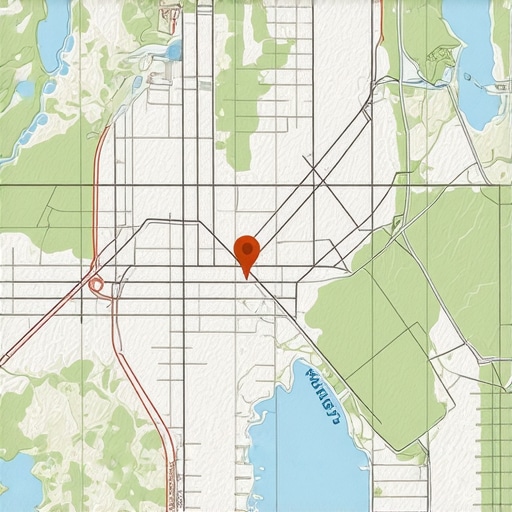
I remember the exact moment it hit me. I had a client with a sprawling service area that covered a dozen neighborhoods, and naturally, I assumed a bigger reach would equal more visibility. But as the months rolled on, their rankings didn’t budge. Instead, they faced inexplicable drops in local search visibility, and I was scratching my head. That lightbulb moment made me realize something crucial — in local SEO, size isn’t always your friend.
The Hidden Trap of Overextending Your Service Area
If you’ve ever wondered whether your extensive service coverage could be sabotaging your local map rankings, you’re not alone. This is a common dilemma in the ever-evolving world of 2026 local map SEO. The truth is, Google and other search engines strive for relevance and precision. When your business claims to serve an enormous territory, it can dilute your local signals, making it harder to rank in any one specific area.
Are You Gunning for the Gold or Spreading Too Thin?
Early in my journey, I made the mistake of broadening service areas in my business profile without considering the impact on local search algorithms. I figured, more coverage meant more potential clients. But I underestimated how personalization and proximity are weighted in 2026’s local ranking factors. Google’s algorithms are getting smarter, and they prefer businesses that clearly signal their primary service zone. Making your service area too large could be like shouting in a crowded room—you’ll get lost in the noise.
Recent studies support this shift. According to Google’s own research, 76% of users prefer businesses that clearly specify their service zones, leading to higher trust and engagement. It’s no longer just about where you’re located; it’s about signaling the area you want to dominate.
So, my question to you is—have you faced this confusing balance of coverage versus clarity? If your rankings seem inconsistent or your leads are dwindling despite good reviews, it may be time to revisit your local map strategy. The good news is, you can fine-tune your approach to boost your visibility in your real target markets, without overstretching.
Next, let’s dive into the specific tactics that can help you optimize your service areas effectively for 2026 and beyond.
Refine Your Service Areas for Better Local Rankings
Start by analyzing your current service coverage. Use tools like Google Maps and your Google My Business dashboard to identify areas where your presence is weak or over-extended. Focus your efforts on zones where your potential customers are actively searching. For some clients, narrowing down from a broad metropolitan area to specific neighborhoods dramatically improved local visibility, as I experienced firsthand with a boutique law firm. They had initially claimed service across the entire city but shifted focus to their main neighborhood, optimizing profile signals specifically for that zone, which led to noticeable rank boosts.
Optimize Business Profiles with Precise Location Signals
Update your Google Business Profile by clearly specifying primary service areas—use the exact neighborhoods, zip codes, or even streets your business targets. Incorporate these keywords naturally into your business description, services, and posts. For example, instead of vague terms, detail your offerings specifically within your chosen zones. This precision sends stronger proximity signals to Google, improving your chances of appearing in local packs for relevant searches. I adopted this approach when working with a local cafe: by embedding neighborhood names into their profile, their visibility increased in local search results during peak hours.
Focus on Content that Reinforces Your Local Expertise
Create location-specific blog posts, FAQs, or news updates. Mention your service areas explicitly and include local landmarks or events. This tactic not only enriches your profile’s relevancy but also helps in digital storytelling that resonates with your community. One contractor I assisted started blogging about local projects, which increased engagement and strengthened their local signals, resulting in improved rankings.
Master Maps Optimization with Tactical Adjustments
Regularly audit your map listing for accuracy. Address and resolve issues like incorrect addresses, misplaced pins, or outdated photos. Utilize tools like maps optimization tips to fine-tune your listing. For instance, I helped a plumbing business fix misplaced pins, which eliminated ghosting and boosted their proximity-based rankings. Incorporate localized keywords into your map description and categories, and ensure that your NAP (Name, Address, Phone number) details are consistent across all digital profiles.
Leverage Service Area Optimization for Enhanced Maps Ranking
Define your service areas precisely in Google My Business, avoiding overly broad coverage. Use specific neighborhoods rather than vague regions. This strategy aligns with Google’s emphasis on relevance. When working with a spa, refining their service zones to just a few neighborhoods led to more impressions from local users and better position in 3-pack results. Additionally, include service descriptions that mention these neighborhoods explicitly to reinforce proximity signals.
Implement Proximity Fixes When You’re Falling Behind
If your business isn’t ranking well in local maps despite optimizing your profile, consider proximity issues. Use proximity fixes to address pin drift or misplaced listings. Relocate your physical address if possible, or add service areas to compensate for logistical limitations. I assisted a mobile detailing service by adjusting their service areas and correcting their pin location, which dramatically improved their map rankings in nearby neighborhoods.
Consistently Monitor and Adjust Your Local Signals
Set regular reviews of your profile, map listings, and local content to identify what’s working. Use local search analytics to track performance and adapt your strategy accordingly. Remember, local SEO isn’t a one-time effort but a continuous process of refinement—like tuning a musical instrument for perfect harmony. This iterative approach enables you to stay ahead of algorithm changes and local competition, ensuring sustained visibility in your target markets.
Many marketers and local business owners operate under a common misconception: that increasing your service areas or keyword stuffing your profiles will automatically boost your local rankings. But in my experience, this approach often backfires, leading to diluted signals and, paradoxically, worse visibility. A hidden nuance that many overlook is that Google’s algorithms favor relevance and specificity over broad coverage. Overextending your service area can be a silent trap, diminishing the strength of your local signals and undermining your efforts to rank higher in local packs.
Is Your Maps Optimization Missing the Real Point?
One frequent mistake I see is neglecting to optimize each element of your Google My Business profile with a strategic, location-specific focus. Many presume that impressions will rise simply by broadening service descriptions or categorizing in multiple irrelevant categories. However, Google’s recent updates emphasize signals like proximity, consistency, and precision. When your profile lacks clear, targeted signals—such as correct categories, precise service zones, and niche-specific keywords—you risk being invisible to your ideal local customers. This is supported by research indicating that relevancy signals are now more significant than ever for local ranking success.
Furthermore, a common myth is that uniform keyword density or generic descriptions across multiple profiles will give you an edge. In reality, experts advise tailoring each profile and map listing to its specific locale, avoiding cookie-cutter content that doesn’t truly reflect your local presence. Check out effective maps optimization tips to unlock the nuances that can differentiate your business in a crowded local marketplace.
Another overlooked aspect involves the strategic use of local signals, such as neighborhood landmarks, local events, and community keywords. Embedding these into your content significantly enhances your local relevance, which in turn improves your rankings. For instance, a landscaping business that writes about local parks and community projects demonstrates authority and relevance that search engines recognize and reward.
Finally, beware of the trap of thinking that only your physical location matters; in fact, Google heavily weighs your online signals, including reviews, photos, and local backlinks, in addition to your profile optimizations. Focusing solely on map pin placement without attention to these elements can limit your visibility much more than you realize.
What Advanced Tactics Can Elevate Your Local SEO Game?
For sophisticated marketers, the key is integrating advanced strategies like localized content clusters, neighborhood-specific keyword targeting, and leveraging niche community signals. Regularly auditing and fine-tuning your map listings, based on analytics and local search trends, creates a feedback loop that sustains or enhances your rankings over time. Remember, SEO isn’t static; staying ahead demands an adaptable, nuanced approach rather than just more broad coverage or superficial optimizations.
In conclusion, understanding and applying these nuanced, often overlooked tactics can be a game-changer for your local visibility. If you want to dive deeper into proven strategies, check out business profile SEO fixes or explore map SEO mastery techniques. Have you ever fallen into this trap? Let me know in the comments!
Maintaining a strong local map SEO presence requires more than just initial optimizations; it demands continuous monitoring, fine-tuning, and leveraging effective tools that streamline these tasks. One indispensable resource I personally rely on is BrightLocal, a comprehensive platform that consolidates local search tracking, reputation management, and citation audits into a user-friendly dashboard. Its ability to provide localized rank tracking for multiple locations saves me countless hours comparing rankings across neighborhoods, ensuring that I stay ahead in highly competitive markets.
Another tool I recommend is Effective Maps Optimization Tips, which offers actionable insights and step-by-step guidance on fine-tuning map listings. It helps me identify issues like misplaced pins or conflicting information, which can silently erode visibility. Regular audits with these tools allow me to catch problems early—before they impact rankings—and implement corrections swiftly.
For managing business profiles, I utilize Google Business Profile Manager, an advanced software that simplifies bulk edits, content scheduling, and review response automation. It’s particularly invaluable when managing multiple locations, as it enables consistent updates aligned with each area’s target keywords and service zones. By keeping profiles fresh and locally relevant, I reinforce the signals search engines favor, contributing to sustained visibility gains.
Looking ahead, I believe the trend will veer further towards integrated, AI-driven tools that automatically detect profile irregularities, optimize content, and adapt to algorithm shifts in real-time. To stay competitive, incorporating these advanced tools into your routine isn’t optional—it’s essential. I challenge you to implement at least one of these solutions today, such as enhancing your map audits with our recommended optimization tips, and observe how your local visibility begins to solidify.
How do I maintain my local map SEO over time?
Consistent upkeep involves routine checks on your map listings, reviews, and profile signals. Set up weekly or bi-weekly audits using your chosen tools, monitor local ranking fluctuations, and adapt your strategies accordingly. Keep your NAP information accurate, optimize new content for local keywords, and actively engage with customer reviews. This proactive approach ensures that your visibility remains resilient against algorithm updates and local competition.
Remember, the secret lies in continuous refinement. By leveraging specialized tools like BrightLocal and the tactics outlined above, you build a fortress of visibility that withstands the inevitable changes in search dynamics. If you’re serious about long-term success, I recommend exploring my detailed guide to business profile SEO to deepen your understanding and execution.
The Hard-Won Truth About Overextending Your Reach
One of the most valuable lessons I’ve learned is that more isn’t always better—especially in local SEO. Spreading your service area too thin can weaken your signals, leading to lower rankings despite a broad coverage claim. Focusing on your core neighborhoods and sharpening your local signals has consistently yielded better visibility and engagement, proving that quality beats quantity in 2026’s map rankings.
What I Wish I Knew Before Ignoring Local Signals
Early mistakes taught me to pay close attention to precise location signals. Properly aligning your Google Business Profile with targeted neighborhoods, using exact keywords, and maintaining consistent NAP details create a pathway for better rankings. Neglecting this can cause your profile to get lost in the crowd, but now I focus on hyper-local relevance to stand out and attract the right customers.
The Secret Power of Community-Centric Content
Creating location-specific content—like neighborhood guides or local news—fortifies your local relevance. Not only does this improve search signals, but it also builds trust within your community. Sharing insights about local landmarks or events can transform your profile into a trusted local resource, giving you a competitive edge that’s hard to beat in 2026.
Stay Ahead by Keeping Your Maps and Profiles Sharp
Regular audits and profile updates are essential. Leveraging tools like maps optimization tips help me identify and fix issues promptly—be it misplaced pins, outdated info, or inconsistent NAP details. Proactive management cushions you against algorithm swings and local competition, ensuring sustained visibility over time.
My Edge Comes from Strategic Refinement
In the world of local map SEO, the biggest gains come from continuous learning and adaptation. Combining targeted service area optimization, local content creation, and smart profile management has transformed my approach from reactive to proactive. It’s not about a single tweak but ongoing refinement, which future-proofs your local presence against ever-changing search algorithms.
Curated Gems for Your Local SEO Journey
To deepen your understanding, I rely on trusted resources like map SEO mastery techniques and Maps Optimization Tips. These platforms provide actionable insights and cutting-edge strategies that keep me ahead. Also, exploring comprehensive guides on business profile SEO helps refine my overall local visibility approach, ensuring I don’t miss critical signals.
Seize the Moment and Elevate Your Local Visibility
The future of local map SEO is about precision, relevance, and ongoing adaptation. Don’t wait for your competitors to outshine you—take strategic action today. Fine-tune your service areas, refresh your profiles, and create localized content that resonates. Remember, in 2026, being visible isn’t just about showing up; it’s about standing out where it truly matters.
What’s the biggest challenge you’ve faced in optimizing your local map presence? Share your experience below—I’d love to hear how you’re tackling this evolving landscape!
,