Winning the Street-Level War: How Small Shops Outperform National Franchise SEO
For years, the narrative in local search has been one of intimidation. Small, independent business owners look at the Google Map Pack and see the monolithic presence of national franchises – brands with million-dollar marketing budgets, dedicated SEO teams, and thousands of backlinks. It feels like a rigged game. However, as we move into 2025 and 2026, the landscape of google business profile seo is shifting dramatically. The “David vs. Goliath” story isn’t just a metaphor anymore; it is the new reality of the algorithm.
Google’s recent updates have begun to prioritize “hyperlocal relevance” over raw brand authority. While a national franchise might have a high domain authority, they often lack the “street-level” agility that a local shop owner possesses. Corporate entities are often bogged down by red tape, generic templates, and a disconnect from the actual communities they serve. This creates a massive opening for the underdog. By leveraging specific, local data points that a corporate office in a different time zone can’t possibly track, you can execute the ‘David vs. Goliath’ move to outrank national brands on your local street and claim the top spot in the Map Pack.
The secret lies in authenticity and proximity. In the following sections, we will break down exactly how small shops are using their size as an advantage, turning what used to be a weakness into a precision-guided weapon for local dominance.
The “Scale Trap”: Why National Franchises Struggle with Local Map Pack SEO
National franchises suffer from what I call the “Scale Trap.” To manage 500 or 1,000 locations, corporate marketing departments rely on automation and centralization. While this is efficient for payroll, it is disastrous for google business profile seo. When a brand tries to manage every listing from a single dashboard, the “soul” of the local listing is lost. They use stock photos of smiling models, generic descriptions that read like a legal disclaimer, and rigid NAP (Name, Address, Phone) templates.
One of the most significant weaknesses of the franchise model is “Data Ghosting.” This occurs when corporate databases are not updated in real-time with local changes. Perhaps a location changed its holiday hours, moved its entrance to the side of the building, or updated its local phone number. If the corporate office doesn’t push that update through their centralized system, a discrepancy is created. Google’s algorithm hates discrepancy. In 2026, accuracy is the baseline for trust. You can learn more about cleaning up the data ghost and why old citations stop your business from ranking to ensure your independent shop doesn’t fall into the same trap.
Furthermore, franchises often suffer from a lack of local engagement. A corporate social media manager in Chicago isn’t going to post about the local high school football game or the road construction happening right outside the shop’s front door in Austin. This lack of localized content signals to Google that the business is a “ghost” in the machine – a generic entity rather than a pillar of the community. Small businesses that lean into their local identity can easily bypass these corporate giants by being more “human” than a brand manual allows a franchise to be.
Hyperlocal SEO: The Small Business Secret Weapon
What is **hyperlocal seo**? It is the practice of optimizing your online presence for a very specific, small geographic area – sometimes as small as a few blocks or a specific neighborhood landmark. While a national franchise might target “Plumber in Los Angeles,” a smart independent operator will target “Emergency plumber near the Silver Lake Reservoir.”
The 2026 search algorithm favors these micro-clusters. Research into “Plumbing Content Clusters” has shown that small businesses are beating big brands by focusing on neighborhood-specific problems. For example, if a specific neighborhood has notoriously old clay pipes, an independent plumber can create a Google Business Profile post or a website landing page specifically addressing “Old clay pipe repair in [Neighborhood Name].” A national franchise would never go to that level of detail because their content must be broad enough to apply to every city in the country.
To identify these micro-opportunities, you should use specialized local seo tools. These tools allow you to see exactly what people in a five-block radius are searching for, rather than just looking at city-wide data. When you align your profile with these high-intent, neighborhood-specific queries, you aren’t just competing; you are changing the rules of the game. You are also addressing the signal gap: why generic local SEO is no longer enough to win your city. By filling that gap with hyperlocal data, you become the most relevant answer for the user’s specific location.
Visual Intent: Why Real Shop Photos Beat Corporate Stock Every Time
In the 2026 algorithm update, Google has doubled down on “Visual Intent.” With the rise of AI-powered map agents, the search engine isn’t just looking at your text; it’s “looking” at your photos. It can distinguish between a generic stock photo of a wrench and a real, high-resolution photo of your actual team working in a local driveway.
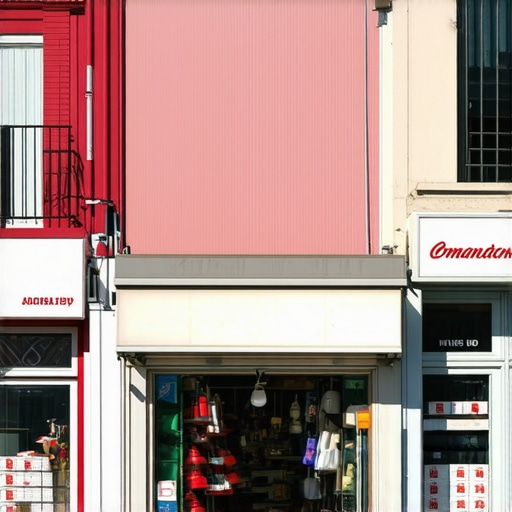
Franchises are notorious for using polished, fake-looking stock photos. These images lack the EXIF data (metadata that includes GPS coordinates) and the visual “grit” of a real location. To Google, these photos look like advertisements, not evidence of a local business. Small shops have the advantage of being able to take raw, street-level, and interior photos every single day. A photo of your shop’s front door with the local street sign in the background is worth more than a thousand words of corporate copy. It proves to Google’s AI that you are exactly where you say you are.
This is the click-through secret: why real shop photos beat stock images every time. Users are also more likely to click on a listing that looks “real.” When a customer sees a photo of a messy, busy workshop, they see a business that is actually doing work. When they see a sterile stock photo, they see a middleman. If you haven’t updated your imagery recently, you need to understand why stock photos kill 2026 map rankings and how to fix them.
The Proximity Tweak: Cracking the “Near Me” Filter
Proximity remains one of the most powerful ranking factors in the Map Pack. However, many businesses – especially franchises – fail to optimize for it correctly. This is known as the “Proximity Trap.” A corporate office might set a 50-mile service radius for all its locations, thinking they are casting a wide net. In reality, they are diluting their local relevance.
As a small business, you can use a google maps ranking service to pinpoint exactly where your map pin should be and how your service area should be defined. Sometimes, moving your map pin just a few feet to the actual entrance of your building, or narrowing your service radius to the three most profitable zip codes, can trigger a massive boost in “Near Me” visibility. Google wants to provide the most convenient result. If your profile clearly shows you are the most proximal and relevant option for a specific street corner, you will beat the franchise that is three miles further away, regardless of their brand name.
Implementing 3 proximity tweaks for winning 2026 “Near Me” clicks involves auditing your address format and service area settings. Are you listed as a service-area business when you have a physical storefront? Are you using a P.O. Box (a major red flag for Google)? These small technical adjustments are often overlooked by corporate managers but are the bread and butter of why your phone isn’t ringing and how to secure 2026 business profile SEO wins.
Review Strategy: Personalization vs. Automated Templates
Reviews are the lifeblood of the Map Pack, but the *way* you handle them matters more than the quantity. Franchises often use automated review management software that spits out robotic responses like: “Thank you for your feedback, [Name]. We value your business.” Google’s AI is now smart enough to recognize these templates and devalues them as “low-effort engagement.”
Small shops can win here by being personal. When you respond to a review, mention the specific job or the specific location. For example: “Thanks, Sarah! It was great helping you with that water heater on Elm Street yesterday.” This response does two things: it builds trust with the customer, and it feeds the algorithm specific “keywords” (water heater, Elm Street) that confirm your business category and your geographic location. This is the one review response tactic that triggers a local ranking boost.
Furthermore, you should focus on the quality of the reviews you solicit. A review that includes a photo taken at your place of business and mentions a specific service is mathematically more valuable to the algorithm than a generic 5-star rating. You can even learn how to rank on maps in 2026 without chasing new reviews by optimizing the ones you already have through strategic, keyword-rich responses and engagement. This level of personalization is simply not scalable for a national brand, making it your ultimate competitive advantage.
Conclusion: Reclaiming Your Territory
The war for the Google Map Pack isn’t won with the biggest budget; it’s won with the best data. National franchises are often “data rich but insight poor.” They have the numbers, but they don’t have the street-level intuition that you do. By focusing on hyperlocal SEO, authentic visual content, and personalized customer engagement, you can rank higher on google maps than brands a hundred times your size.
Remember, the 2026 algorithm prioritizes real-time, authentic human interaction. It wants to see that you are active in your community, that your photos are current, and that your information is 100% accurate. You don’t need a corporate boardroom to win; you just need to be the best version of your local self. If you’re ready to start your journey to the top, use a google business profile audit tool to identify your current weaknesses. Or, if you want a professional to handle the heavy lifting, consider hiring a local seo expert who understands the nuances of google business profile seo. The street-level war is yours to win – it’s time to reclaim your territory.