The Maps Embed Strategy That Actually Drives Physical Store Visits
In the rapidly shifting landscape of 2026, Local SEO has transcended the era of simple keyword stuffing and basic NAP (Name, Address, Phone number) consistency. I am Shahid Anwar, and over the last decade, I have watched the evolution of Google’s local algorithms from the early days of “Places” to the sophisticated AI-driven ecosystem we navigate today. The reality for local business owners and marketers is stark: a simple iFrame embed on your “Contact Us” page is no longer a ranking signal; it is a relic of the past. To truly dominate the local landscape, you need a strategy that bridges the gap between technical signals and consumer psychology. This guide is a deep dive into the technical anatomy of map embeds – a strategy designed not just to move the needle on a search results page, but to drive actual, physical foot traffic to your storefront. We are moving beyond visibility and into the realm of “Driving Direction” requests and high-intent conversions.
Why Traditional Maps SEO is Failing in 2026
If you are still following the playbook from 2022, you are likely falling victim to what I call the “Proximity Trap.” For years, proximity was the king of local search. If a user was standing two blocks away from your store, you ranked. However, as I discussed in my analysis of The Proximity Trap: Why Your Business Profile is Invisible Two Blocks Away, Google’s algorithm has evolved to prioritize intent and visual search over mere physical distance. In 2026, the local algorithm is heavily influenced by real-time signals and “Visual Intent.” Google’s AI models now analyze how users interact with maps across different platforms, looking for patterns of engagement that suggest a business is a prominent authority in its niche.
Traditional google business profile seo is failing because it treats the map embed as a static element. Many agencies still believe that simply pasting a snippet of code from Google Maps onto a website is enough to verify a location. It isn’t. Google now looks for “Semantic Relevance.” They want to see that your map embed is part of a larger, coherent story about your business’s relationship with its service area. The algorithm is now capable of identifying “Visual Search” patterns, where users are looking for specific storefront aesthetics or real-time activity levels. If your digital presence doesn’t reflect the physical reality of your location through dynamic, well-placed embeds, you will remain invisible to the high-intent customers who are ready to visit your store right now.
Data from the latest local search studies indicates a 40% shift toward AI-driven map agents. These agents don’t just look for a pin on a map; they look for the “Prominence” of that pin. This prominence is built through a network of high-quality embeds that signal to Google that your business is not just a location, but a destination. To overcome the limitations of modern proximity filters, you must adopt a strategy that emphasizes relevance and prominence over simple distance.
The Technical Anatomy of a High-Converting Map Embed
To rank google business profile listings effectively, we must look at the code itself. Most businesses use the standard iFrame embed provided by the “Share” button on Google Maps. While this is a start, it is the most basic implementation possible. For those looking to truly compete, a dynamic API-based embed via the Google Maps Platform is the gold standard. This allows for a much richer data exchange between your website and Google’s servers. By using the JavaScript API, you can customize the map experience, adding custom markers, layers, and even real-time data that encourages user interaction.
One of the biggest mistakes I see is the placement of the map. Most businesses tuck it away on the “Contact Us” page. In my experience, Mastering Local Visibility Boost Techniques with Map SEO requires placing maps where the intent is highest. This means embedding maps on “City Pages” and specific “Service Area Pages.” If you are a roofing contractor serving five different suburbs, each of those suburbs should have a dedicated landing page with a map embed centered on that specific area. This signals to Google that your relevance extends beyond your primary storefront. It provides a geographical context that the algorithm uses to verify your “Service Area Business” (SAB) status or your storefront’s reach.
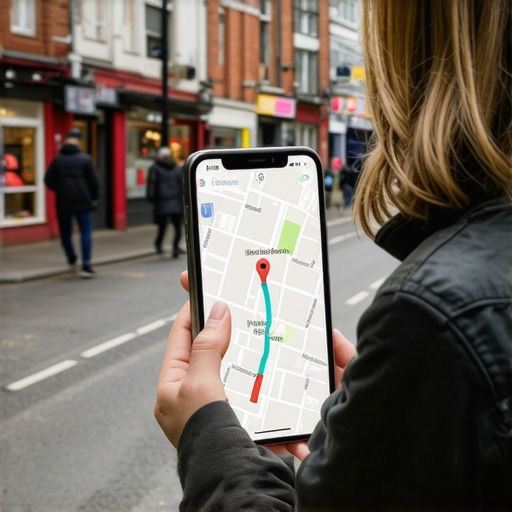
When you use advanced local seo tools to audit your site, you’ll find that Google uses these embeds to verify the “Prominence” and “Relevance” of a business location. A map on a city page doesn’t just show where you are; it tells Google that you are an active participant in that local economy. Furthermore, dynamic embeds allow for better mobile responsiveness. In 2026, over 85% of local searches happen on mobile devices while the user is on the move. A map that doesn’t load correctly or is difficult to manipulate on a smartphone is a lost conversion and a negative ranking signal. High-converting embeds should always include a clear “Get Directions” overlay that deep-links directly into the user’s native Google Maps app.
Connecting Embeds with LocalBusiness Schema (JSON-LD)
The technical “magic” happens when you wrap your map embed in a semantic “sandwich” using LocalBusiness Schema. Schema markup is the language of search engines, and when used correctly, it tells Google *exactly* what the map represents. Is this a physical storefront where customers are welcomed? Or is it a service area boundary for a mobile business? Without structured data, Google is forced to guess, and in the world of SEO, guessing leads to lower rankings. You should follow the latest How to Boost Your Business Profile SEO for Better Local Rankings strategies by ensuring your JSON-LD is perfectly synced with your map data.
Specifically, your `LocalBusiness` or `Store` schema should include the `hasMap` property, which points directly to the URL of your Google Maps listing. But we go deeper. By using the `geo` property (containing `latitude` and `longitude`) and the `areaServed` property, you create a mathematical link between your website’s content and your Google Business Profile. This removes all ambiguity. When Google’s crawler sees a map embedded on a page that is also marked up with precise coordinates and service area definitions, it builds a high level of “Entity Confidence.”
This is crucial for surviving the 4 Map Listing Optimization Fixes for 2026 Visual Search [Data]. As AI-generated answers become the norm, Google needs to be 100% sure about your location before it recommends you in a voice search or a Gemini-powered local recommendation. The schema acts as the verification layer. If your schema says you are at Point A, and your map embed shows Point A, and your GBP listing confirms Point A, you have achieved the “Trust Trifecta.” This is how you secure your spot in the coveted Local 3-Pack, even when competitors are physically closer to the searcher.
The “Contextual Embed” Strategy: Beyond the Website
Many SEOs stop at their own website, but a truly dominant google maps ranking service strategy extends far beyond your own domain. This is the concept of “Hyperlocal SEO.” To build massive prominence, your map needs to be embedded in contextually relevant locations across the web. This includes local press releases, niche industry citations, and community blog posts. If you are a plumber in Austin, having your Google Map embedded on an Austin neighborhood association website or a local “Best of Austin” blog post is a powerful signal of local authority.
This is where the distinction between generic and niche citations becomes vital. As I’ve explained in Why Niche Citations Beat Generic Directories for 3-Pack Rankings, Google values a link or an embed from a relevant local source far more than a listing in a global directory that no one visits. When you embed your map on a local news site or a niche-specific directory, you are creating a “Map Cloud” around your business. Each embed serves as a digital breadcrumb that leads back to your Google Business Profile.
Using a professional gmb ranking service can help automate and scale this distribution. The goal is to create a network of embeds that all point back to the same CID (Customer Identification) URL. This specific URL format is the most direct way to reference your business entity within Google’s internal database. When multiple authoritative, local sites embed your map using your CID, Google views your business as a pillar of the local community. This strategy is particularly effective for multi-location brands that need to establish individual authority for each of their branches in different cities.
Converting Map Views into Physical Foot Traffic
Visibility is a vanity metric; foot traffic is a sanity metric. To turn map views into actual customers, we must focus on the User Experience (UX) of the embed. The most critical element is the “Driving Direction” button. Data shows that “Driving Direction” requests are one of the strongest ranking signals for the 3-Pack because they represent the ultimate form of user intent. If someone asks for directions, they are highly likely to visit. Therefore, your map embed should be optimized to make this action as frictionless as possible.
Mobile responsiveness is non-negotiable. In 2026, your map must be “thumb-friendly.” It should allow for easy zooming and panning without the user accidentally clicking away. Furthermore, you should leverage the real-time capabilities of the Google Maps API. Show your current “Open Now” status directly on the map marker. If a customer sees a map and realizes you are closing in 15 minutes, they might not start the drive. However, if they see you are open for another three hours, the friction is removed. You must optimize google business profile details so that they sync perfectly with these embeds, providing real-time data like “Busy Hours” or current promotions.
Another psychological trigger is the inclusion of “Social Proof” within or near the map embed. Placing a feed of your latest 5-star Google reviews right next to the map creates a powerful conversion point. The user sees where you are, and immediately sees that you are trusted by others in their community. This combination of geographical convenience and social validation is the secret sauce for driving physical visits. We aren’t just showing them a pin; we are giving them a reason to drive to that pin. By focusing on these high-intent clicks, you ensure that your SEO efforts result in actual revenue, not just higher positions in a tracking tool.
Common Mistakes: Why Your Map Isn’t Ranking
Even with a solid embed strategy, certain technical pitfalls can derail your progress. One of the most common issues I encounter is the use of stock photos instead of unique, geo-tagged images. Google’s vision AI is incredibly sophisticated in 2026. It can recognize the difference between a generic office photo and the actual street-view of your storefront. If your map embed is surrounded by stock imagery, you lose a layer of authenticity that the algorithm craves. Always use original photos of your building, your team, and your signage.
Another frequent error is “Pin Drift.” This occurs when the coordinates in your schema, your GBP listing, and your map embed are slightly different. Even a discrepancy of a few meters can confuse the algorithm, especially in dense urban areas where multiple businesses share the same building. This “ambiguity” erodes your visibility. Furthermore, be wary of the “Radius Filter” issue. Over-optimizing your service area by selecting too large a radius can actually hurt your rankings in your immediate vicinity. Google prefers businesses that have a clear, realistic service boundary. If you claim to serve a 100-mile radius but your map embeds are only on sites within a 5-mile radius, the inconsistency will trigger a manual or algorithmic review.
- Using stock photos: Always replace these with geo-tagged, original storefront images to satisfy visual search requirements.
- Incorrect map pin placement: Regularly audit your CID and coordinates to ensure there is no “Pin Drift” across platforms.
- Over-optimizing service areas: Keep your service area realistic to avoid the “Radius Filter” which can suppress your profile in local searches.
- Ignoring API updates: Ensure your technical team is keeping your Google Maps Platform API calls up to date with the latest security and feature protocols.
Conclusion: Dominating the Local 3-Pack in 2026
Dominating local search in 2026 requires a shift from passive listing management to active, technical optimization. By treating your map embeds as a strategic asset rather than a footer element, you can significantly boost google business profile ranking results. Remember, the goal is to create a consistent, high-authority digital footprint that proves your prominence to Google and your value to the customer. Stop treating Maps SEO as a “set and forget” task. Implement these advanced embed strategies, align them with your structured data, and watch as your digital visibility transforms into physical foot traffic. The future of local business belongs to those who master the intersection of the map and the click.