The Primary Category Mistake That Hides Your Business from Local Searches
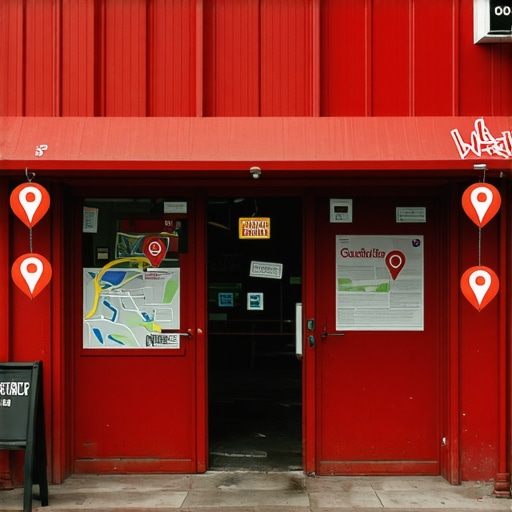
Imagine investing thousands into a pristine office space, hiring the best staff, and gathering hundreds of five-star reviews, only to find that your business is virtually invisible to the people standing right outside your front door. This is the “Invisible Business” syndrome, a common ailment I see daily as a local SEO expert. Many business owners believe that if they provide a great service, Google will naturally find them. However, the reality is far more clinical. Even with a perfect location, the wrong “Primary Category” on your Google Business Profile (GBP) acts as a digital blindfold for Google’s algorithms. If you haven’t explicitly told Google exactly what you are – not just what you do – you are effectively locked out of the competition before the race even begins. This single setting is often the difference between a phone that never stops ringing and a silent storefront. To avoid these pitfalls, it is crucial to understand the 7 Subtle Profile Errors That Keep Your Shop Out of the 3-Pack.
Why the Primary Category is the “Master Key” of Local SEO
In the complex ecosystem of local search, the Primary Category is not just a label; it is the strongest ranking signal within the Google Business Profile environment. When a user types a query into Google, the search engine must perform a lightning-fast matching process. Before it looks at how many reviews you have or how far you are from the user, it filters the entire database based on category relevance. Google uses these categories to interpret user intent. If the category doesn’t align with the searcher’s goal, your business is discarded from the results immediately.
Research within the local SEO community, particularly discussions on Reddit and specialized forums, consistently highlights that category changes are one of the fastest ways to see a ranking shift. In many cases, correcting a mismatched primary category can move a business from the second or third page of results into the Map Pack within 48 hours to 14 days. This is because Google’s confidence in your business’s relevance to a specific query skyrockets the moment the category is optimized. For any business owner, leveraging google business profile seo is essential for ensuring that this “Master Key” is turned in the right direction.
Furthermore, the Primary Category influences which “attributes” and “service menus” become available to your profile. For instance, a “Hotel” category unlocks check-in times and star ratings, while a “Restaurant” category unlocks menu URLs and online ordering buttons. By choosing the wrong primary category, you aren’t just losing rankings; you are losing the technical features that convert searchers into customers. To rank higher on google maps, you must first ensure your foundational category represents the core of your revenue-generating activity.
The Intent Gap: How Google Filters Your Business
The “Intent Gap” occurs when there is a disconnect between what a user is looking for and how you have classified your business. Google’s algorithm is designed to be a perfectionist at matching queries to categories. If a user searches for an “Emergency Plumber,” but your primary category is set to “HVAC Contractor” – even if you have “Plumbing” listed as a secondary service – you are highly likely to be filtered out of the top results. Google views the Primary Category as your “Identity” and secondary categories as your “Capabilities.” In a competitive market, identity always trumps capabilities in the initial filtering phase.
This filtering process is why many multi-service businesses struggle. A general contractor who primarily wants kitchen remodeling leads but sets their category to “Handyman” will find themselves competing for small, low-ticket repair searches rather than the high-value projects they actually desire. You must align your profile with the high-intent keywords that drive your business. I often recommend looking at The One Tweak to Service Menus That Actually Expands Your Map Reach to ensure that once your category is set, your services support that intent. Without this alignment, the algorithm perceives a lack of focus, and your visibility suffers as a result.
5 Common Category Mistakes Killing Your Rankings
Identifying the problem is the first step, but understanding the specific nuances of category errors is where the real work begins. Here are the five most frequent mistakes I encounter:
1. Choosing a Broad Category vs. Specific
Many owners choose “Restaurant” when they should choose “Italian Restaurant” or “Pizza Restaurant.” While “Restaurant” has a higher search volume, the competition is astronomical. By being specific, you signal higher relevance for niche queries. Google rewards specificity because it leads to a better user experience. If someone wants sushi, showing them a general “Restaurant” is a gamble; showing them a “Sushi Restaurant” is a win.
2. The “Kitchen Sink” Approach
There is a temptation to add every possible secondary category that could vaguely relate to your business. This is a mistake known as “Category Dilution.” When you add 15 secondary categories, you weaken the “authority” of your primary category. Many agencies use local seo software to track how adding or removing secondary categories impacts the ranking of the primary keyword. Usually, less is more.
3. Ignoring Seasonal Shifts
For businesses like landscaping companies that pivot to snow removal in the winter, failing to update or rotate the importance of categories can be a death sentence for seasonal revenue. While you shouldn’t change your primary category every week, a strategic shift for a 4-month season is a valid tactic used by pros to maintain google maps seo dominance year-round.
4. Category-Keyword Mismatch
Your website content must support your GBP category. If your primary category is “Dental Clinic” but your website’s H1 tags and content focus entirely on “Teeth Whitening,” Google sees a conflict. The lack of “Local Technical Health” between your site and your profile creates distrust in the algorithm, leading to lower rankings.
5. The Primary/Secondary Conflict
Sometimes, a secondary category can “cannibalize” the primary one. For example, if you are a “Law Firm” (Primary) and also list “Personal Injury Attorney” (Secondary), but all your backlinks and website content are about personal injury, Google might get confused about which query you should rank for, often resulting in you ranking poorly for both. This is why a professional google maps ranking service focuses on creating a clear hierarchy of information.
Data-Backed Evidence: The Impact of Category Optimization
The importance of category selection isn’t just anecdotal; it is backed by significant industry data. A comprehensive 2023 study by the DAC Group, which analyzed 1,050 business locations, found a direct correlation between category precision and Map Pack positioning. The data showed that businesses that utilized specific, niche primary categories consistently outperformed those using generic terms, even when the generic terms had higher raw search volume. This suggests that Google’s “Relevance” score is weighted more heavily than “Prominence” in many local niches.
Additionally, an analysis by Localo involving over 2 million Google Business Profiles revealed that the top 3 results in the Map Pack almost always share the exact same primary category as the user’s search intent. If the search is for “Boutique Hotel,” 90% of the top results will have “Boutique Hotel” as the primary category, not just “Hotel.” This reinforces the idea that the primary category is the entry requirement for the 3-Pack. Rio SEO Research also lists “Wrong or missing GBP categories” as one of the silent killers of local technical health, noting that it is often the first thing audited during a professional google business profile optimization. To understand the financial impact of these rankings, read How to Prove Your Local Search Visibility is Actually Driving Real Sales.
Navigating the 2026 Map Pack: AI and Visual Intent
As we look toward the future of local search in 2026, the role of categories is evolving. With the rise of AI-only search (like Google’s Search Generative Experience) and visual search, Google is moving toward “labeling” businesses in the background. AI models rely on structured data and category labels to understand the context of a business. In a visual search world, if a user points their camera at a storefront, Google uses the category data to overlay relevant information like menus or booking links instantly.
Visual intent is becoming a major factor. Google is now analyzing the photos uploaded to your profile to see if they match your chosen category. If your category is “Bakery” but all your photos are of “Coffee Cups,” the AI may de-prioritize you for bakery-related searches. This holistic approach to google business profile ranking means that your category choice must be the “North Star” for all your other content, including images and posts. For more on this, check out Map Listing Optimization: How to Rank for 2026 Visual Intent. Staying ahead of these trends is why a dedicated google maps ranking service is becoming a necessity rather than a luxury for local businesses.
Step-by-Step: How to Audit and Fix Your Categories
To ensure your business isn’t being hidden, follow this audit checklist to improve google maps ranking:
- Research Competitors: Use a tool to see which primary categories the top 3 businesses in your area are using. Often, they have found a niche category you missed.
- Check for Category Dilution: Remove any secondary categories that do not represent at least 10% of your revenue or search intent.
- Verify Website Alignment: Ensure your homepage and service pages use the same terminology as your GBP categories.
- Analyze NAP Consistency: Ensure your Name, Address, and Phone number (NAP) are consistent across all directories, as this reinforces your category authority.
- Use Professional Tools: Using a google business profile audit tool can reveal hidden category conflicts that aren’t visible in the standard GBP dashboard.
By following these steps, you can ensure your local map pack seo strategy is built on a solid foundation. For more detailed tactics, refer to Effective Maps Optimization Tips to Enhance Local Search Visibility.
Conclusion & Call to Action
The Primary Category is the foundation of your local digital presence. If it is wrong, every other SEO effort – from backlinks to reviews – will yield diminished returns. Don’t let a simple labeling error hide your business from the customers who need you most. Take the time today to audit your profile and ensure your “Master Key” is opening the right doors. If you’re unsure where to start, I can help. Contact me for a professional google business profile audit and let’s get your business the visibility it deserves.