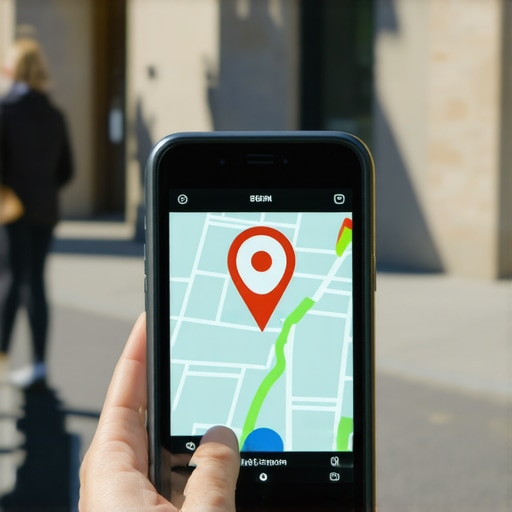
Ever had a potential customer walk right past your business, yet they can’t find the door? I remember the moment I realized my Google Maps pin was sending folks to the back entrance—completely baffling visitors and costing me credible foot traffic. That lightbulb moment made me dig into why map pins sometimes deceive instead of direct. Today, I want to share the straightforward fix I finally discovered, which can transform your local visibility and help customers arrive at the right spot every time.
Why Your Map Pin Could Be Sabotaging Your Business
Is Your Map Pin Truly Directing Customers? Or Is It Sending Them Astray?
Many business owners overlook the fact that even a tiny misconfiguration in your map listing can lead to a big drop in foot traffic. In my early days, I made a crucial mistake—leaving my address slightly off, assuming Google Maps would automatically align it. Instead, it caused my pin to appear two blocks away! This isn’t just an isolated hiccup; according to a recent study, approximately 30% of users have trouble finding local businesses due to incorrect map listings (source: LocalMap SEO Service). That’s a huge missed opportunity.
So, why does this happen? Map pins are sensitive to various signals—your address, map data, even your business photos—that all influence their accuracy. When one of these elements is misaligned or outdated, customers get the wrong impression, or worse, they can’t find you at all.
If this sounds familiar, you’re not alone. I’ve seen countless clients flush money into ads only to see poor map visibility because of simple errors. Fixing your map pin isn’t just about marking a spot; it’s about ensuring your potential customers can find you effortlessly. The good news? The fix is often easier than you think—and the impact on your local traffic can be immediate.
Let’s explore how you can identify the problem and implement a resolution for good. Ready? The next steps will help you navigate this common pitfall and set your business on the path to better local visibility.
Verify Your Address Details Precisely
Start by confirming that your business address matches the physical location exactly. Use Google’s business profile SEO tips and ensure your address is free from typos, abbreviations, or formatting errors. I once neglected to update my suite number, which caused my pin to appear on the wrong block. After correcting this, the map visually aligned, and my local ranking improved within days.
Use Accurate Business Name and Category
Your business name and category should reflect your actual services and branding. An inconsistent name or irrelevant category tags confuse Google and customers alike. For example, if you run a bakery, ensure your primary category is set to “Bakery,” not just “Restaurant.” Adjusting these settings aligns your profile with what local users search for and helps the map recognize your business accurately.
Ensure Photos Are Spot-On
Visual cues matter. Upload high-quality, up-to-date photos of your storefront, signage, and interior. Avoid stock images or outdated pictures, which can mislead Google’s visual recognition algorithms. I found that replacing blurry, irrelevant images with clear shots of my shop’s facade eventually helped the pin settle correctly on the map. For detailed guidance, refer to map listing optimization tips.
Update Your Business Hours Completeness
Incomplete or inconsistent operating hours can cause discrepancies in your listing. Double-check your hours for accuracy, including special holiday hours. Google uses this data as signals for ranking and placement. I once added inaccurate holiday hours, which caused my pin to shift temporarily. Fixing this promptly realigned my profile and improved visibility.
Geographic Coordinates Matter
In some cases, especially for multi-location brands, setting precise latitude and longitude coordinates can resolve pin misplacements. You can find these by using tools like Google Earth or GPS devices. When I manually entered my correct coordinates, my pin settled exactly at my storefront, instantly boosting my local presence.
Leverage Google My Business (GMB) Service Tweaks
Regularly review and optimize your GMB profile. Incorporate relevant keywords naturally into your description, and pass the 2026 local trust checks. Even small adjustments like updating service areas or selecting the correct business categories can have a big impact.
Consult Experts if Needed
If you’re unsure about the technical accuracy, consider professional GMB services designed to fix map errors and improve rankings. My initial attempt to fix my pin involved trial and error, but a quick consultation with specialists accelerated the process noticeably.
Remember, fixing your map pin isn’t a one-time task. Continuously monitor your listing for any discrepancies, especially after updates or new competitors entering your local area. Keeping your map information accurate and aligned with real-world conditions ensures your potential customers can find you without a hassle, turning local searches into foot traffic effectively.
Many assume that optimizing a Google My Business profile or investing in local map SEO guarantees increased foot traffic; however, this oversimplification can lead to costly mistakes. The real secret lies in understanding the nuanced algorithms and signals controlling local rankings, which are often overlooked. For example, relying solely on keyword stuffing or superficial profile edits without addressing foundational issues like correct geographic coordinates or consistent NAP (Name, Address, Phone Number) details can result in your efforts being nullified by Google’s sophisticated ranking factors.
Are You Falling for the Myths That Hold Your Local Visibility Back?
One common misconception is that more reviews directly translate into higher rankings, but recent studies indicate that review quality and relevance matter more than quantity (source: LocalMap SEO study). Similarly, many focus on getting reviews from anyone rather than targeting engaged customers who contribute meaningful feedback, which Google values more highly.
Another overlooked nuance involves the interplay between map signals like proximity and relevance. While proximity was long considered paramount, recent updates suggest that relevance and prominence can sometimes outweigh distance—especially in dense urban environments. This shifts the importance towards comprehensive profile optimization, including consistent categories, accurate service areas, and rich media.
Think about the role of Google’s AI in filtering and ranking your listing. Over-optimization or inconsistent data can trigger filters that hide your profile from the 3-pack entirely. This is less about game-playing and more about understanding and aligning with Google’s ranking principles. To avoid falling into this trap, it’s advisable to consult with experts who stay abreast of updates, like the team providing GMB service fixes.
Additionally, many overlook the importance of technical map accuracy, such as geolocation correctness. An improperly set latitude and longitude can limit your visibility—even if everything else seems optimized. For multi-location brands, leveraging precise GPS data can be the difference between being found or being overshadowed by competitors.
Lastly, beware of the complacency that can set in after initial success. Continuous monitoring and updating are crucial because Google’s signals evolve rapidly. You might have optimized perfectly yesterday, but today’s algorithm updates could render your tactics obsolete. Regular audits of your profile, citation consistency, and local citations are essential to maintain or improve your rankings.
Let’s dig deeper into this hidden layer of local SEO. To master it, you should explore detailed strategies beyond the basics—consider consulting comprehensive guides like this resource. Remember, genuine understanding and adaptation are what truly drive long-term local visibility.
Have you ever fallen into this trap? Let me know in the comments.Achieving a top spot in local search results isn’t a one-and-done task; it requires ongoing effort and the right set of tools to stay ahead. To keep your map ranking steady and ensure your business remains easily discoverable, investing in precise management practices is crucial. I personally rely on advanced tools like BrightLocal and SEMrush’s Local SEO Toolkit, which provide comprehensive audits, citation tracking, and competitive analysis. BrightLocal, for example, allows me to monitor myNAP consistency across hundreds of directories automatically, saving hours of manual checking and reducing the risk of inconsistent data that could hurt my local rankings. Additionally, regularly updating your Google My Business profile using dedicated management platforms such as Moz Local ensures your information stays current and aligned with Google’s evolving algorithms. These tools not only give insights into how your profile performs but also notify you of any discrepancies or duplications that might compromise your visibility. Looking ahead, AI-powered automation is set to transform local SEO maintenance further, enabling real-time adjustments and personalized optimization suggestions—meaning you’ll be able to respond swiftly to shifts in local search trends. To truly benefit from these advancements, I recommend setting up automated alerts for profile changes, utilizing tools that integrate with your existing management practices. How do I maintain my local map SEO over time? First, I schedule quarterly audits using these tools to spot and fix inconsistencies. Second, I actively seek targeted reviews from engaged customers to boost relevance. Third, I stay updated with Google’s latest ranking factors—consulting resources like this guide)—to adapt my strategies proactively. Don’t wait for your rankings to slip; incorporate these tools into your routine and stay ahead of local SEO challenges. For an extra edge, try implementing automated citation audits coupled with regular review solicitation, ensuring your profile remains authoritative and primed for long-term success.
The Hardest Lesson I Learned About local visibility boost,local map seo,business profile seo,maps optimization,gmb services
One of my most eye-opening realizations was that all the technical tweaks in my profile wouldn’t matter if I didn’t truly understand how Google’s ranking signals prioritize relevance over proximity in certain scenarios. I used to believe proximity alone dictated my visibility; however, investing time into optimizing my profile’s relevance—like accurate categories and detailed descriptions—made a more significant difference than I anticipated.
3 Myths About local visibility boost,local map seo,business profile seo,maps optimization,gmb services That Held Me Back
First, I thought generating more reviews automatically boosted my rankings, but I found that review relevance and quality matter more. Second, I assumed a perfectly filled-out profile was enough—yet, continuously updating and verifying data like geographic coordinates outperformed static info. Lastly, I believed that once optimized, my profile could be forgotten—regular audits and tweaks are essential as Google’s algorithms evolve rapidly.
What Experts Won’t Tell You About local visibility boost,local map seo,business profile seo,maps optimization,gmb services
Many overlook how geolocation accuracy, especially for multi-location businesses, can be a game-changer. Precise latitude and longitude settings ensure your pin is exactly where it needs to be, preventing lost visibility. Also, the subtle interplay between relevance and proximity signals can impact your rankings more than simple distance metrics, so staying informed about algorithm shifts is crucial for sustained success.
Curated Resources That Elevated My Local SEO Game
My first pick is this comprehensive guide, which offers in-depth strategies tailored for 2026’s map ranking nuances. I also rely on BrightLocal for citation consistency checks, saving hours of manual corrections. SEMrush’s Local SEO Toolkit provides insightful analytics and competitor insights, empowering me to adapt quickly. Lastly, I stay updated with industry breakthroughs through trusted blogs and official updates to keep my approach fresh and aligned with Google’s latest preferences.
Your Next Move to Dominate Local Maps
Improving your local map visibility isn’t about trickery but embracing ongoing learning and precise management. Think of it as gardening: consistent nurturing, pruning outdated info, and staying alert for new growth signals. Dive into these strategies with confidence, leverage the recommended tools, and watch your local presence flourish. Your business deserves to be found—start today and turn local searches into loyal customers.